Tree Planting After Removal in Bozeman
Replanting and tree installation in Bozeman after a removal. Species chosen for hard freezes, temperature swings, and variable Gallatin Valley soils.
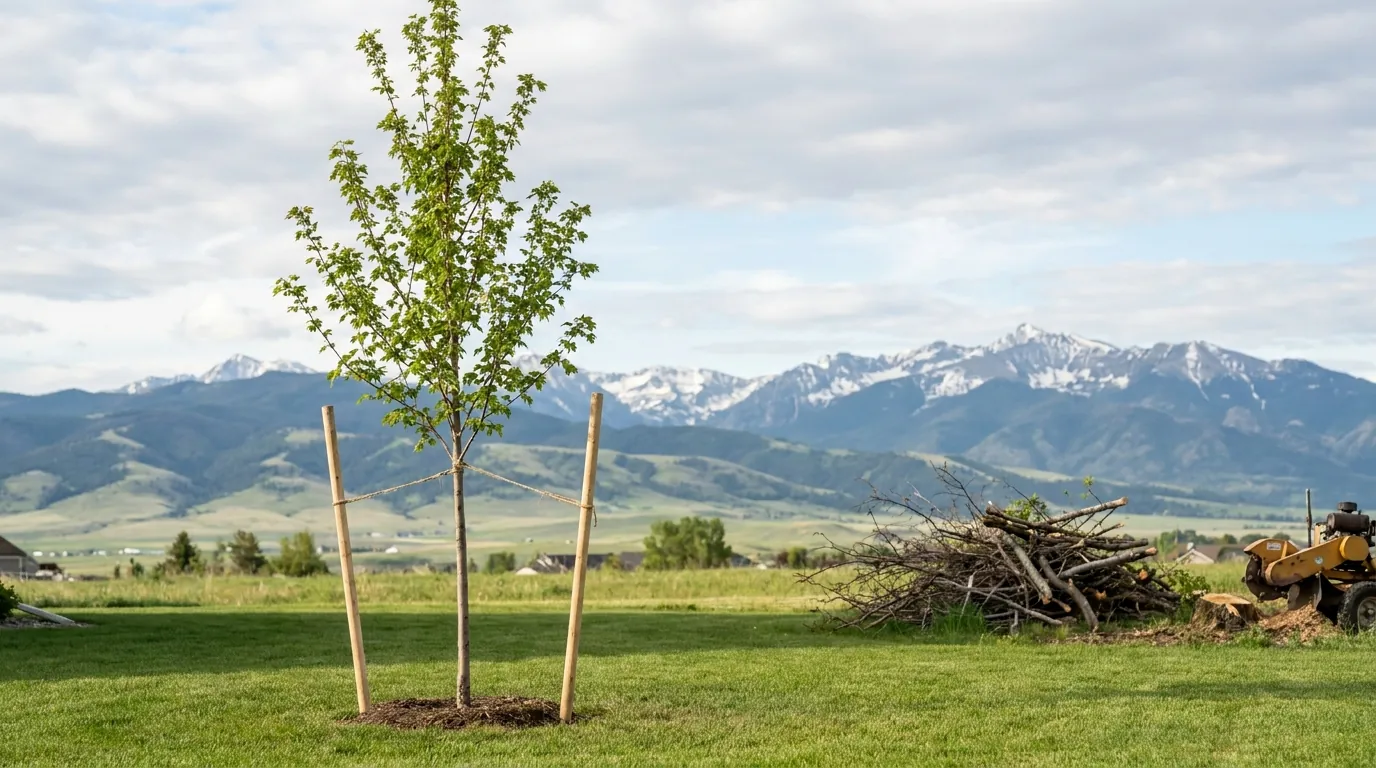
Replanting after a tree comes down
Tree removal installation is the work of putting a new tree in place after an old one has been removed, or planting where a yard needs shade and shelter. Once a large tree comes out, a property can feel exposed — less shade on the south side, more wind across the yard, and a bare spot where the canopy used to be. Choosing and planting the right replacement is what turns a removal into an improvement rather than a loss.
The decisions that matter most in Bozeman are species selection and placement. Our hard freezes, wide temperature swings, and variable mountain soils mean a tree that thrives in a milder valley may struggle here. Cold-hardy species suited to the Gallatin Valley, planted where their roots have room and their crown will not crowd a structure or line, are the ones that establish and last. Getting the depth and the timing right — planting when the ground can be worked and roots can settle before a hard freeze — is just as important as the species itself.
Replanting usually follows a takedown, so it pairs naturally with our tree removal service; grinding the old stump low or below grade clears the way for a new root ball. If an existing tree nearby is worth keeping, a round of corrective pruning at the same time helps the whole yard hold together as the new planting grows in.
How a planting is done
A tree that is placed and planted well needs far less rescue later.
-
Match the species to the site
We look at sun, wind exposure, soil, and how much room the roots and crown will have, then suggest cold-hardy species that fit Bozeman conditions and your goals for shade or screening.
-
Prepare the planting spot
Where a tree was just removed, the stump is ground out and the area cleared of large roots and debris so the new tree has loose, workable ground to root into.
-
Plant at the right depth
The root flare is set at grade — not buried — because trees planted too deep in our heavy, variable soils struggle to establish and are prone to root problems.
-
Stake, mulch, and set up watering
Young trees are staked if the site is windy, mulched to hold moisture and moderate soil temperature, and given clear watering guidance to carry them through the first seasons and into their first hard freeze.
Planning to replant?
Tell us about the spot — sun, wind, and what you want the tree to do — and we will help you choose and place a replacement that lasts.
Serving Bozeman, Four Corners, Livingston, and the surrounding valleys.
Frequently asked questions
When is the best time to plant a tree in Bozeman?
Spring after the ground thaws and early fall are both good windows, because roots can settle before extreme heat or a hard freeze. The key is giving the tree enough time to establish before winter arrives, which is why timing matters as much as species here.
Can you plant where a tree was just removed?
Yes, but the old stump and large roots usually need to be ground out first so the new root ball has room. We often grind the stump during removal and plant into the cleared spot, which gives the new tree loose, workable soil.
What kinds of trees do best in this climate?
Cold-hardy species suited to the Gallatin Valley's freezes and temperature swings establish best. The right choice depends on your soil, sun, and wind exposure, so we recommend species based on the specific spot rather than a one-size-fits-all list.
How much watering will a new tree need?
New trees need consistent, deep watering through their first couple of seasons, especially in our dry, windy stretches. We set up a simple watering plan when we plant so the tree establishes roots before it has to face a full winter on its own.