Stump Grinding
Stump grinding in Bozeman, MT. Remove trip hazards, stop regrowth, and reclaim your yard. Learn how depth, roots, and soil affect the job.
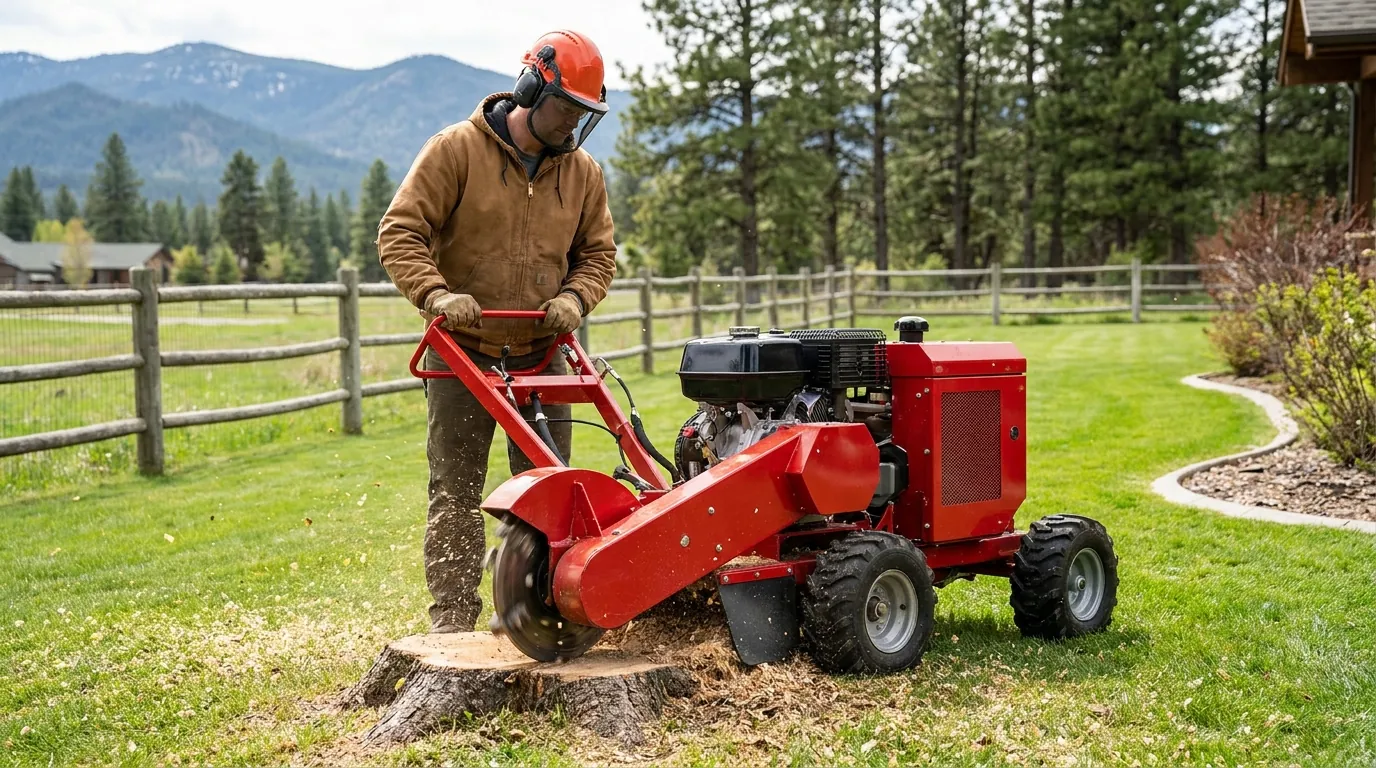
Why that stump is worth grinding
A leftover stump is more than an eyesore. It's a trip hazard near walkways, a lawnmower-killer, and an open invitation for carpenter ants, beetles, and fungi that can spread to nearby healthy trees. Some species — cottonwood and aspen especially — send up suckers from the roots for years if the stump is left in place, turning one removed tree into a cluster of unwanted shoots.
Grinding is the clean way to deal with all of that. Instead of digging out the entire root ball, a grinder chews the stump and major surface roots down into chips, below the soil line. This is almost always paired with tree removal, but we also grind old stumps left behind by storms or previous owners.
How grinding works
The job is quick compared to removal, but it still takes planning around what's underground.
-
Locate utilities and lines
Before any grinding, we check for buried lines, irrigation, and septic components near the stump so the cutting wheel never meets something it shouldn't.
-
Clear and set up
We remove rocks and debris around the base that could become projectiles, and position the grinder for a clean path across the stump.
-
Grind below grade
The wheel reduces the stump and surface roots to several inches below the soil line — deeper if you plan to replant or lay sod over the spot.
-
Backfill and tidy
The grindings can be used to backfill the hole or hauled away. We rake the area smooth so it blends back into the yard.
What Bozeman soil does to the job
Our variable mountain soils are often gravelly or rocky under the topsoil, and buried rock slows grinding and wears cutting teeth faster than clean soil would. We plan for that so there are no surprises. Grinding depth also depends on what you intend to do next: a spot you only want to mow over needs less depth than one where you plan to plant a new tree, which needs clean, settled soil for roots to establish.
If you're clearing several stumps as part of a larger project, grinding usually goes hand in hand with lot and brush clearing. We handle stump grinding throughout Bozeman and surrounding areas including Livingston.
Reclaim the ground that stump is taking up
Tell us how many stumps, roughly how wide, and whether you plan to replant, and we'll scope the grinding.
Call to schedule stump grinding.
Frequently asked questions
How deep do you grind a stump?
Typically several inches below grade for a mow-over finish, and deeper if you want to replant. We match the depth to what you plan to do with the spot afterward.
What happens to the grindings?
They can be used to backfill the hole, left as mulch, or hauled away — your choice. Grindings settle over time, so a slight mound at first is normal.
Will the roots keep growing after grinding?
The tree won't regrow once the stump is ground and the cambium is destroyed, though for aggressive sucker-prone species like aspen we grind surface roots as well to limit shoots.
Can you grind a stump near a fence or foundation?
Usually yes, but tight spots take more care and sometimes a smaller machine. We check for buried utilities and nearby structures before starting.