Tree Trimming and Pruning
Tree trimming and pruning in Bozeman, MT. Reduce storm risk, clear structures, and keep trees healthy with cuts timed for the local climate.
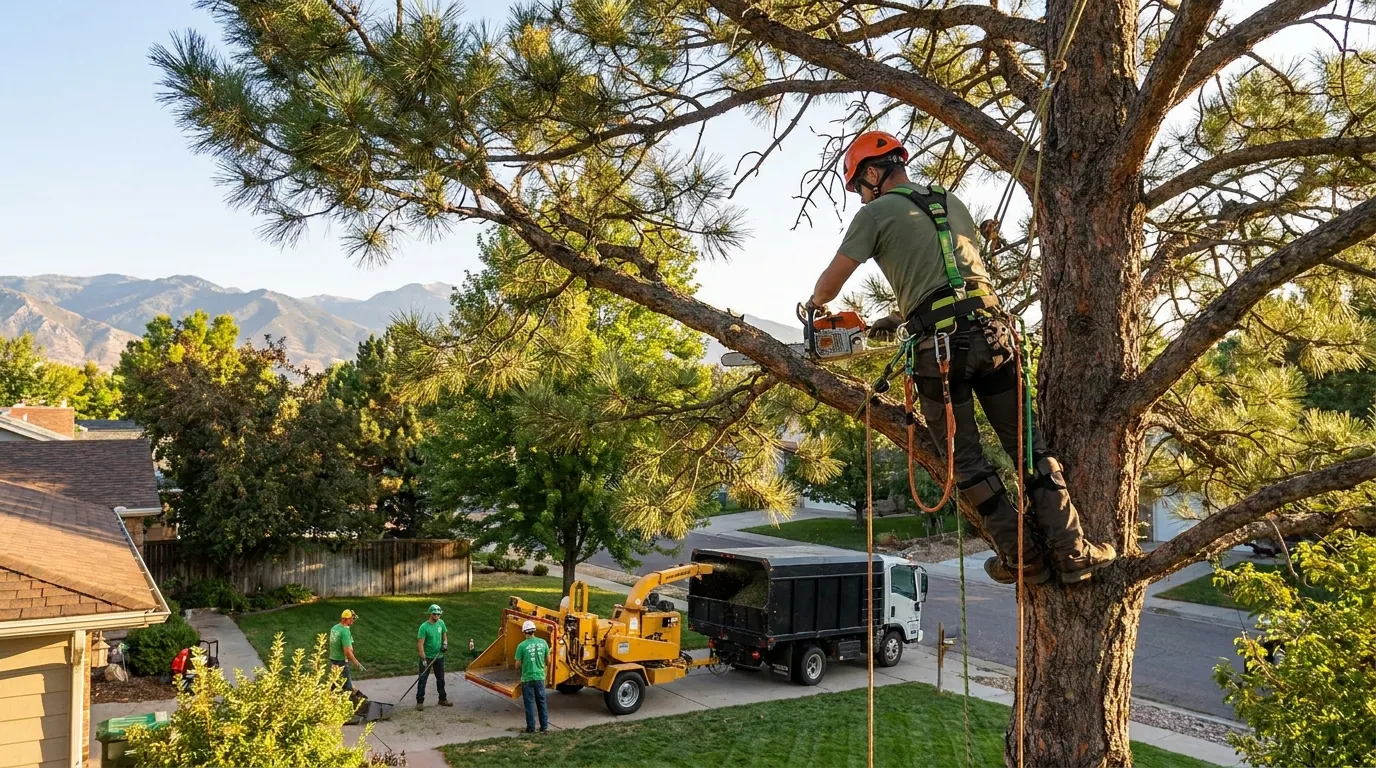
What good trimming does — and what it can't fix
Tree trimming keeps a healthy tree healthy and a borderline tree manageable. The right cuts remove dead and crossing limbs, lighten long branches that catch wind, and open the canopy so storms pass through instead of pushing against a sail. Done well, trimming reduces the odds of the next windstorm tearing a limb into your roof.
What trimming cannot do is save a tree with a split trunk, extensive decay, or an unstable root plate. If that's what you're facing, trimming only delays the real decision, and a tree health assessment or outright tree removal is the more honest path. Warning signs that trimming is overdue include limbs rubbing the siding, deadwood accumulating in the crown, and branches hanging over the driveway after heavy snow.
How a trimming visit goes
We prune to the tree's structure, not just to whatever is in reach. The process looks like this.
-
Walk the tree
We look at the whole crown, note deadwood, weak forks, and limbs threatening structures or lines, and agree on the goals before cutting.
-
Deadwood and hazard limbs first
Dead, broken, and clearly hazardous limbs come out first — these are the pieces most likely to fail in the next wind or snow load.
-
Structural and clearance cuts
We prune for strong branch structure and clear what needs clearing from roofs, walkways, and overhead lines, keeping cuts clean at the branch collar.
-
Cleanup
Brush is chipped and the site is left clean. We can leave chips on site as mulch if you want them.
Timing trimming to the Bozeman climate
Timing matters here. Our hard freezes and wide temperature swings mean sap-heavy species respond differently depending on the month, and heavy snow loads are a real pruning concern — a long, overextended limb that looks fine in July can snap under wet March snow. Reducing that leverage before winter is some of the most useful trimming we do.
Dry late summer is also when stressed trees show their weak limbs most clearly, which makes it a good time to assess and remove deadwood. We trim trees across Bozeman and nearby communities such as Wineglass and Four Corners, and we match the work to the species and the season rather than cutting on a fixed schedule.
Thin a crown or clear a roofline
Tell us what the tree is doing — scraping the house, dropping limbs, blocking light — and we'll recommend the right cuts.
Call to schedule trimming for your property.
Frequently asked questions
How much can you safely trim off a tree?
As a rule we avoid removing too much live canopy at once, because over-thinning stresses the tree. The aim is to remove hazards and improve structure while leaving the tree enough leaf area to recover.
When is the best time to trim in Bozeman?
It depends on the species and the goal, but reducing wind- and snow-prone limbs before winter is often valuable, and late summer is a good window for clearing deadwood. We time the work to the tree, not a fixed date.
Is topping a tree a good idea?
No. Topping — cutting the main stems back to stubs — leads to weak regrowth and decay. We prune to proper branch unions instead, which is both safer and better for the tree.
Can trimming prevent a tree from falling?
It can reduce limb failures and wind load, but it won't fix a structural or root problem. If the whole tree is unstable, trimming isn't the answer — an assessment is.