Tree Health Assessment
Tree health assessment in Bozeman, MT. Find out whether a tree is a hazard, what's wrong with it, and whether to treat, trim, or remove it.
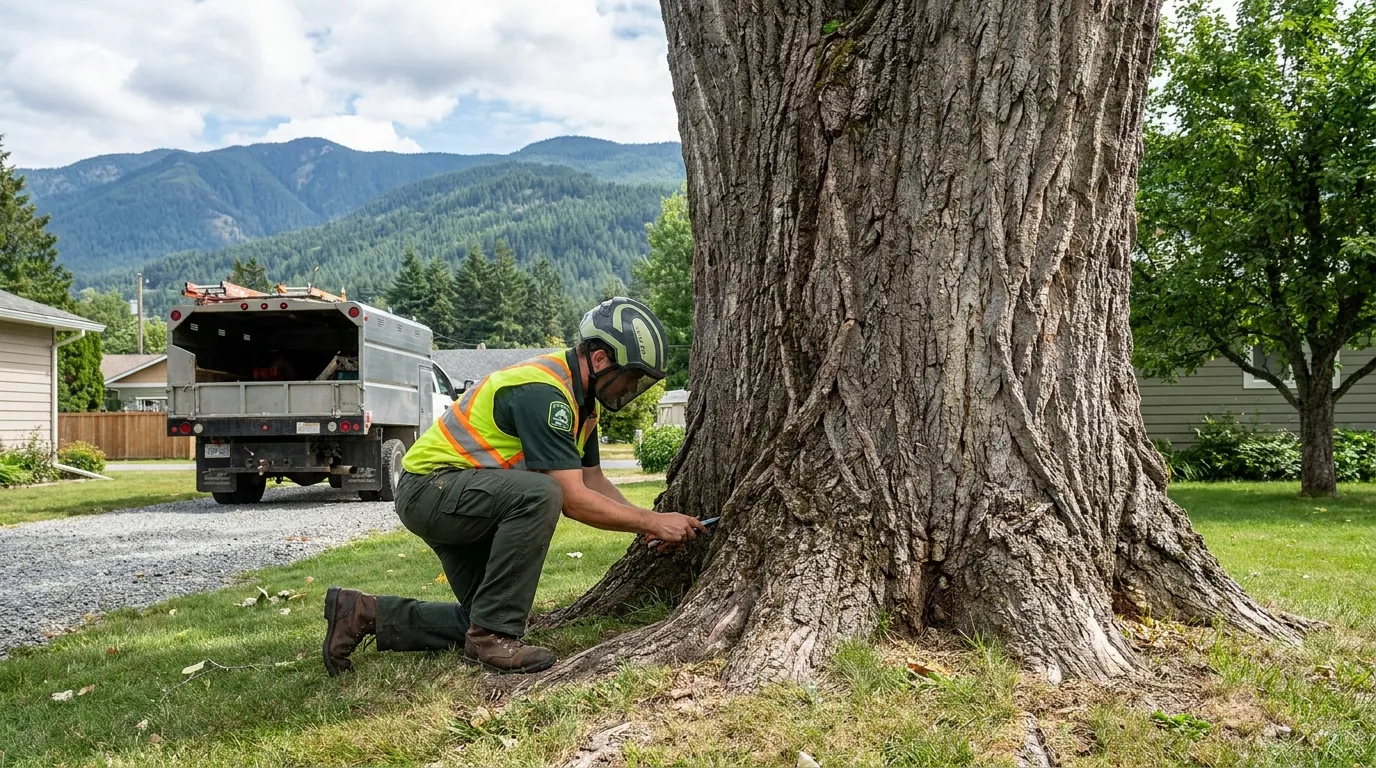
Know before you cut
A tree health assessment answers the question homeowners actually have: is this tree a problem, and if so, what do I do about it? Rather than defaulting to removal, we look at the tree's structure, signs of decay, root condition, and recent changes, then tell you plainly whether it can stay, needs work, or has become a hazard.
This is the right first step when a tree worries you but isn't obviously failing — a lean you're not sure about, thinning foliage, early leaf drop, or a crack you noticed after a storm. The findings point you toward the right action, whether that's tree trimming to remove hazards, monitoring, or planned tree removal when the risk is too high to keep.
What we look at
An assessment is systematic — from the roots up and the crown down.
-
Base and root plate
We check for heaving soil, exposed or girdling roots, fungal shelves, and cavities at the base — common signs of trouble below ground.
-
Trunk and main forks
We look for cracks, included bark in weak forks, decay pockets, and wounds that compromise the tree's structure.
-
Canopy condition
Deadwood, dieback, thinning foliage, and off-season leaf drop all tell us how the tree is faring and whether stress is recent or long-standing.
-
Site and history
Recent construction, grade changes, drought, or storm exposure often explain what we're seeing, and we factor those into the recommendation.
Reading Bozeman trees in context
Local conditions change what the signs mean. Hard freezes and wide temperature swings crack weak unions over time, dry late summers stress trees into early leaf drop that can be mistaken for disease, and shallow root plates in variable mountain soils tip in ways a deep-rooted tree wouldn't. An honest assessment reads the tree against those local realities rather than a generic checklist.
After a storm, an assessment of the surrounding trees often follows an emergency tree service call, because trees that shared the same wind and soaked soil frequently share the same hidden weaknesses. We assess trees throughout Bozeman and nearby areas such as Four Corners and Wineglass.
Worried about a tree but not sure why?
Describe what's changed — the lean, the foliage, a crack — and we'll take a look and give you a straight answer.
Call to schedule an assessment.
Frequently asked questions
Will you recommend removal if the tree can be saved?
No. The point of an assessment is an honest answer. If the tree can stay with trimming or monitoring, we'll tell you that rather than pushing removal.
What signs mean I should get a tree looked at?
A new or worsening lean, cracks in the trunk or forks, mushrooms at the base, heaving soil, early leaf drop, or large deadwood in the crown are all worth checking before they become a hazard.
Can thinning foliage just be drought stress?
Often, yes. Bozeman's dry late summers can thin a canopy or trigger early leaf drop that looks like disease, which is exactly why reading the tree in context matters before deciding anything.
Do I need an assessment before trimming or removal?
Not always, but it helps when the right action isn't obvious. For clear hazards you may go straight to the work; for borderline trees, an assessment keeps you from cutting something that could stay or keeping something that should go.