Tree Removal — How It Works, Start to Finish
Full tree removal in Bozeman, MT. Learn the warning signs, how the work is done safely, and how local soil and storms affect taking a tree down.
When a tree has to come down
Not every struggling tree needs to be removed, but some do — and in Bozeman the decision is often driven by safety rather than looks. A tree that leans more sharply after a windstorm, drops large limbs without warning, or shows a split in a main trunk fork is telling you something. So is a mushroom shelf growing at the base, a hollow that sounds dull when tapped, or heaving soil on one side of the root plate.
Our mature cottonwoods, aspens, and conifers face hard freezes, wide temperature swings, and the dry late-summer stretch that stresses shallow-rooted trees planted in thin mountain soil. When a tree becomes a hazard to a house, a driveway, or a power drop, removal is frequently the safer and more honest call than another round of patch pruning. If you are unsure, a tree health assessment is the right first step before anything is cut.
What the removal actually involves
Every removal is planned around the tree's lean, the species, and what sits below it. A rough sequence looks like this.
-
Site assessment and plan
We walk the tree, note its lean and defects, check for structures, fences, and overhead lines, and decide whether it can be felled in one piece or must be dismantled from the top down.
-
Clearing the drop zone
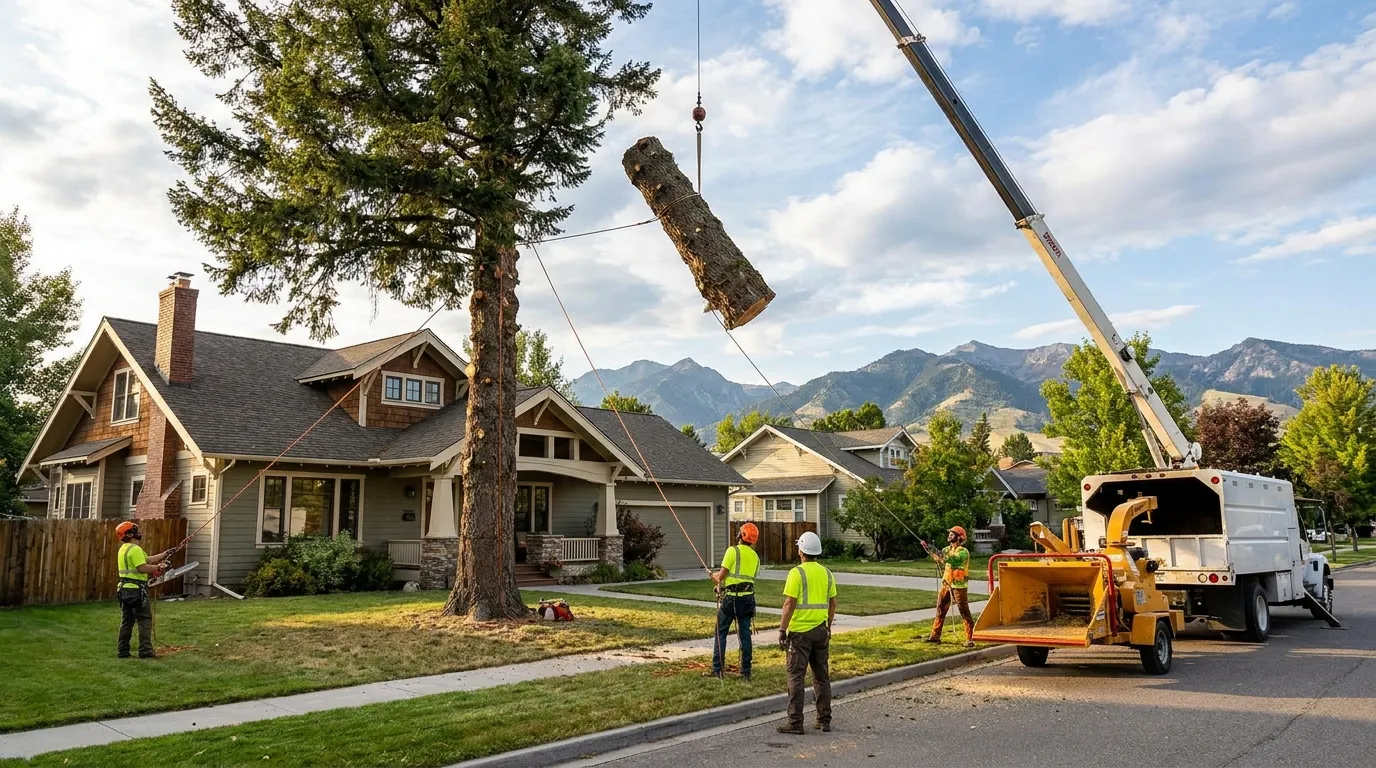
Vehicles, furniture, and anything breakable come out of the way. On tight Bozeman lots that often means rigging limbs down on ropes rather than letting them fall freely.
-
Sectional dismantling or felling
Large conifers near buildings are usually taken down in sections, lowered piece by piece. An open backyard with room to fall may allow a controlled single-cut fell.
-
Processing and haul-off
Limbs are chipped, logs are bucked, and debris is removed. What stays is the stump, which can be ground separately.
-
Stump decision
You decide whether to leave the stump, grind it flush, or grind deep for replanting. Grinding is handled as its own step.
How Bozeman conditions change the job
Local soil matters more than people expect. Many Gallatin Valley yards sit on variable mountain soils over gravel, so a tree's root plate may be shallow and wide. After a wet spring followed by a windy stretch, saturated ground loosens its grip and otherwise healthy-looking trees tip. That changes how we rig and which way we commit the fall.
Season matters too. We prefer to take hazardous trees down when the ground is firm — frozen or dry — because equipment leaves less damage and footing is more predictable. Removals during the spring thaw take extra planning to protect lawns and septic fields. If a storm has already done part of the work for you, that becomes an emergency tree service call rather than a scheduled removal. For nearby properties we also serve areas like Four Corners and Livingston.
Not sure if it needs to come down?
Send us a few photos and the location of the tree, and we'll tell you honestly whether removal is warranted or whether trimming will do.
Call to schedule a look at your property.
Frequently asked questions
Do you remove the whole tree, including cleanup?
Yes. A standard removal includes taking the tree down, chipping brush, and hauling off debris. Stump grinding is a separate step you can add if you want the stump gone.
Can a leaning tree wait until spring?
Sometimes, but a lean that increased after a storm or shows cracked soil at the base is a different situation. Those are usually best addressed before the next wind event rather than waiting out the season.
Will removal damage my lawn or septic field?
We plan access and timing to limit it. Removing a tree over firm or frozen ground does far less turf damage than working during the spring thaw, which is why timing is part of the plan.
Do I need the stump ground out too?
Only if you want to replant, mow over the spot, or avoid regrowth and pests. Many homeowners pair removal with grinding, but you can leave the stump if you prefer.